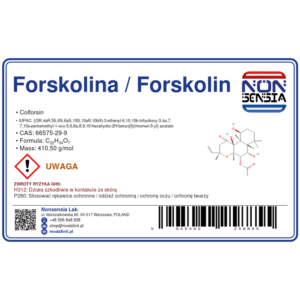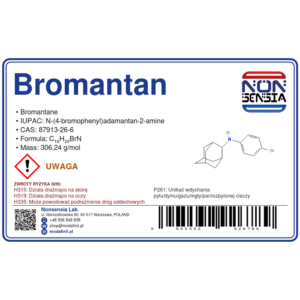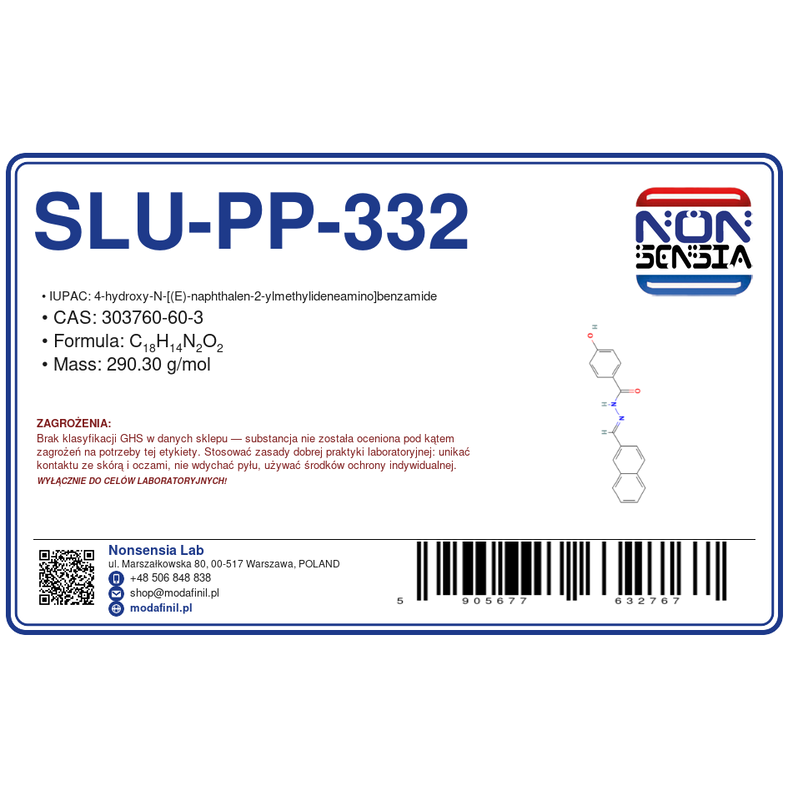
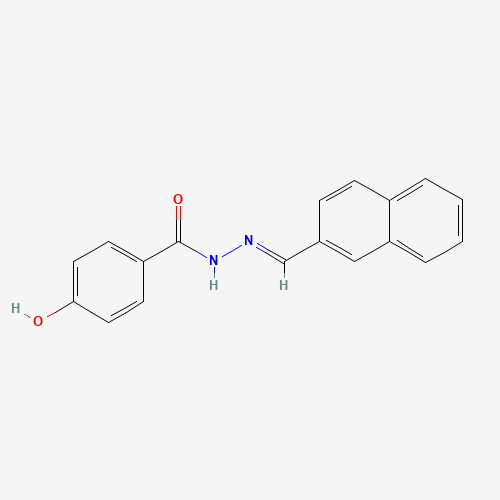
Description
(E)-4-hydroxy-N’-(naphthalen-2-ylmethylene)benzohydrazide (SLU-PP-332), solution in dimethyl sulfoxide (DMSO), 18 mg/18 ml (1.0 mg/ml). Material intended exclusively for in vitro laboratory and analytical research and for use in animal models. The product is not intended for human or animal consumption, is not a medicinal product, dietary supplement, food, or cosmetic.
The Thing That Needs to Be Said Up Front
SLU-PP-332 is a very young compound by the standards of this catalog. The first paper describing its discovery appeared in 2023 [1], and the literature has since been growing at a rate of several publications per year — the most recent of the papers used here date from 2026 [7][8][9]. This is the opposite situation to flmodafinil: there, the literature practically does not exist; here it does exist, but covers only the last three years and only preclinical models.
None of the cited papers describes administration of this compound to a living human being. The data come from studies in mice, from cell lines, and — in one case — from primary muscle cells isolated from human female donors and treated with the compound outside the body, under in vitro culture conditions [5]. This distinction is the subject of the next section.
Three Different Entities That Must Not Be Confused
| Entity | What it is | Status of SLU-PP-332 |
|---|---|---|
| Chemical substance CAS 303760-60-3 |
A chemical concept — a molecule with a defined structure, registered in PubChem (CID 5338394) and ChEMBL (CHEMBL4208749). | yes — this is the only status the molecule actually has |
| Medicinal product | A pharmaceutical preparation: a defined pharmaceutical form, manufacturing under GMP, registration documentation, safety oversight. | NO — in any country. The authors of the source papers disclosed affiliations with biotechnology companies developing ERR-based therapeutics [1][9] — this is a signal of early commercial interest, not of the existence of a registered drug or of impending registration |
| Chemical reagent the material offered here |
A solution for laboratory and analytical work, in DMSO. | yes — and it is offered exclusively in this capacity |
The consequence is unambiguous. The study results cited on this page were obtained exclusively in laboratory animals under preclinical experimental conditions and in in vitro cell cultures — including primary myoblasts isolated from human muscle tissue, where the compound was added directly to the culture medium rather than administered to the donor [5]. None of these studies involved administering SLU-PP-332 to a living human being, and none of these results carry over to the offered material. The reagent is not the form in which the compound has ever been tested in humans, and it must not be used in that way.
Reagent Identification Card
| Systematic name (IUPAC, PubChem) | 4-hydroxy-N-[(E)-naphthalen-2-ylmethylideneamino]benzamide |
|---|---|
| Equivalent name (benzohydrazide) | (E)-4-hydroxy-N’-(naphthalen-2-ylmethylene)benzohydrazide |
| Common name / development code | SLU-PP-332 |
| CAS number | 303760-60-3 |
| Molecular formula | C18H14N2O2 |
| Molar mass | 290.3 g·mol−1 (monoisotopic mass 290.1055 Da) |
| InChIKey | RNZIMBFHRXYRLL-XDHOZWIPSA-N |
| SMILES | C1=CC=C2C=C(C=CC2=C1)/C=N/NC(=O)C3=CC=C(C=C3)O |
| PubChem CID | 5338394 |
| ChEMBL | CHEMBL4208749 |
| Structural class | benzoic acid hydrazone (aroylhydrazone) — small-molecule compound, not a peptide |
| Form supplied | clear to slightly yellow solution in DMSO, 18 mg/18 ml (1.0 mg/ml) |
| Purity of base substance | ≥ 98% (manufacturer’s declaration) |
| Intended use | research reagent — not for human or animal consumption |
The Molecule’s Lineage: From Rational Design to Two Generations of ERR Agonists
Why Such a Molecule Was Designed in the First Place
The starting point was a pharmacological problem: the nuclear ERR receptors (estrogen-related receptors, α/β/γ) are orphan receptors that regulate mitochondrial biogenesis and the energy metabolism of skeletal muscle, but for years there was a lack of synthetic agonists capable of effectively targeting them in vivo — especially the ERRα subtype, for which agonist design proved particularly difficult [1]. A team from Saint Louis University and Washington University in St. Louis described SLU-PP-332 in 2023 as the first synthetic pan-ERR agonist with sufficient pharmacokinetic properties to serve as an in vivo research tool [1]. The next compound in the same family, SLU-PP-915, was designed using structure-based design as a structurally distinct pan-ERR agonist [2], characterized in detail only in 2026 as the first of the pair to show oral bioavailability [6].
The SLU Code — Where the Name Comes From
The prefix “SLU” in the code name reflects the affiliation of the team that discovered the compound — Saint Louis University, where part of the chemical and pharmacological work was carried out, in collaboration with Washington University School of Medicine, the University of Florida Genetics Institute, and the Salk Institute for Biological Studies [1]. The number in the code corresponds to the compound’s position in the laboratory’s internal synthetic series; it is not a registry number or a CAS number.
Timeline
| March 2023 | identification of SLU-PP-332 as a synthetic pan-ERR agonist; first data on exercise capacity in mice [1] |
|---|---|
| September 2023 | study of the role of ERR receptors in the aging kidney, using SLU-PP-332 in 21-month-old mice [4] |
| November 2023 / January 2024 | demonstration of cardioprotective effects in a mouse model of heart failure; introduction into the literature of the second compound, SLU-PP-915 [2] |
| January 2024 | study in mouse models of obesity and metabolic syndrome (diet-induced obese and ob/ob mice) [3] |
| July 2025 | pilot study on primary myoblasts from muscle biopsies of 20 women — the only data derived from human tissue, obtained under in vitro culture conditions [5] |
| January 2026 | full characterization of the orally bioavailable analog SLU-PP-915 [6] |
| February 2026 | first systematic review devoted to pharmacological ERR activation as an exercise mimetic [10] |
| March 2026 | identification of SLU-PP-332 metabolites by LC-MS/HRMS for doping-control purposes — UCLA Olympic Analytical Laboratory [7] |
| April 2026 | second, independent doping-control analytical paper (German Sport University Cologne) [8] and the first systematic structure–activity relationship (SAR) analysis of the SLU-PP-332 scaffold [9] |
The ERR Receptor and What the Preclinical Studies Showed
All of the results below come from studies in laboratory animals or from in vitro cell cultures, and we describe them in the past tense — as what was observed in a specific experiment, not as a property that the compound “has” in a general sense, let alone a human one.
In the discovery paper, administering SLU-PP-332 to mice for eight weeks increased the proportion of oxidative type IIa muscle fibers and treadmill exercise capacity; in a skeletal muscle cell line, the compound increased mitochondrial function and cellular respiration [1]. In mouse models of obesity (diet-induced obese and ob/ob), eight weeks of administration increased energy expenditure and fatty acid oxidation, reduced fat mass gain, and improved insulin sensitivity [3]. In a mouse model of pressure-overload-induced heart failure, both SLU-PP-332 and SLU-PP-915 improved ejection fraction, reduced fibrosis, and increased survival, with genetic dependency analysis identifying ERRγ as the main mediator of this effect [2]. In 21-month-old mice, eight weeks of administration reversed some of the changes associated with kidney aging: proteinuria, podocyte loss, mitochondrial dysfunction, and inflammatory markers [4].
The experiment closest to human tissue involved primary myoblasts isolated from muscle biopsies of 20 women (10 physically active, 10 inactive) who had undergone hip arthroplasty. Cells from the inactive donors, cultured in vitro and exposed to SLU-PP-332, showed reduced NOX4 expression and increased SIRT1, PGC-1α, ERRα, and FNDC5, a decrease in oxidative stress and cellular senescence markers, and increased myotube formation [5]. This is a study on cells of human origin — not a clinical study in the sense of administering the compound to a human being.
Chemistry: A Hydrazone Bond Instead of Peptide Bonds
Why E Geometry, Not a Stereogenic Center, Defines This Molecule
SLU-PP-332 is an aroylhydrazone: a 4-hydroxyphenyl ring connected via a carbonyl group to a nitrogen atom, which is further connected by an N–N bond to a second nitrogen atom forming a C=N double bond with the naphthalene ring. The molecule does not contain an atom with four different substituents and has no stereogenic center — unlike modafinil, where stereogenicity arises from the sulfur atom in the sulfoxide group. The only possible isomerism here is the geometry of the C=N double bond: the material supplied is the fully characterized (E) isomer, consistent with the SMILES notation and the systematic name in the PubChem registries.
What Follows from the Susceptibility of the Hydrazone Bond to Hydrolysis
Hydrazone bonds (C=N–NH–C=O) can be sensitive to hydrolysis in strongly acidic or strongly basic aqueous environments, breaking back down into the aldehyde and hydrazide from which they were formed. This has direct practical significance: it is why we offer the material as a ready-made solution in anhydrous DMSO rather than in aqueous form — and for the same reason, a stock solution prepared from powder should likewise be made in an organic solvent, not in water.
| Parameter | Value | What this means |
|---|---|---|
| Partition coefficient (XLogP) | 3.7 | moderately high lipophilicity — the compound elutes in the later part of the RP-HPLC gradient |
| Topological polar surface area (TPSA) | 61.7 Å2 | moderate — the phenolic and hydrazone groups are the main source of polarity |
| Hydrogen bond donors | 2 | the phenolic group (Ar–OH) and the hydrazide N–H |
| Hydrogen bond acceptors | 3 | carbonyl oxygen, phenolic oxygen, imine nitrogen |
| Rotatable bonds | 3 | moderate rigidity of the scaffold — two aromatic systems joined by a short linker |
| Heavy atoms | 22 | small molecule — molar mass 290.3 g/mol, outside the range typical for peptides |
| Solubility | good in DMSO and organic solvents; poor in water | prepare stock solutions in anhydrous solvent |
Composition, Form, and Packaging of the Solution
- Active substance: SLU-PP-332, purity ≥ 98% (manufacturer’s declaration);
- Solvent: dimethyl sulfoxide (DMSO), analytical grade, ≥ 99.9%;
- Mass concentration: 18 mg of compound / 18 ml of solvent, i.e., 1.0 mg/ml;
- Molar concentration: ≈ 3.44 mmol/l (3.44 mM), calculated as 1.0 mg/ml ÷ 290.3 g/mol based on the molar mass verified in PubChem (CID 5338394);
- Approximate content per drop: assuming that one drop from a laboratory micropipette corresponds to approx. 50 µl, a drop contains approx. 50 µg of SLU-PP-332. The actual drop volume depends on the density of the solution and the type of pipette tip — precise volume measurement for laboratory purposes requires calibrated equipment, not drop counting;
- Form: clear to slightly yellow liquid solution;
- Packaging: glass vial-type bottle with a screw cap, wrapped in light-protective foil; packaged in Poland.
Nomenclature and Synonyms
- SLU-PP-332 — the code name given by the team that discovered the compound, the most common in the literature [1]–[10];
- SLU-SENSIA — a trade name used in this listing for the same compound with CAS 303760-60-3;
- PP-332, PP332, SLU PP332 — alternate spellings found in reagent databases and catalogs;
- (E)-4-hydroxy-N’-(naphthalen-2-ylmethylene)benzohydrazide — the systematic name in the benzohydrazide convention;
- 4-hydroxy-N-[(E)-naphthalen-2-ylmethylideneamino]benzamide — the systematic IUPAC name per PubChem, the only unambiguous one.
Not to be confused with SLU-PP-915 — a structurally distinct, chemically unrelated compound in the same pharmacological category (pan-ERR agonist), containing boron and fluorine atoms (C17H13BFNO3S, PubChem CID 142532359), developed by the same team as an orally bioavailable analog [2][6]. Both compounds are sometimes cited together in the same paper [2][6][8], which makes confusion during bibliographic searches easy.
Laboratory Applications of the Reagent
- reference material for confirming identity and purity by LC-MS/HRMS — the technique for characterizing the compound by this method was described by Möller et al. [8];
- standard for developing metabolite identification methods for doping-control analytics [7][8];
- a chemical tool compound in studies of nuclear ERR receptor activation in in vitro cell-based assays;
- comparison material for distinguishing SLU-PP-332 from the structurally different analog SLU-PP-915 in LC-MS analysis [2][6][8];
- a model compound in studies of aroylhydrazone chemistry and structure–activity relationships [9].
Storage, Handling, and Work Safety
Store in the original, tightly closed bottle, protected from light (packaging wrapped in foil), in a cool, dry place, separately from food and feed and out of reach of children. DMSO is hygroscopic — after each opening, limit exposure to air moisture and close the cap tightly; repeated freeze-thaw cycles of the stock solution promote degradation of the material, so it is recommended to prepare smaller working aliquots.
Work only under laboratory conditions, using personal protective equipment: nitrile gloves, safety goggles, and laboratory clothing. DMSO is a solvent with a high capacity to penetrate the skin and may facilitate the transfer of substances dissolved in it through the skin and mucous membranes — avoid contact with skin and eyes and avoid inhaling vapors. Waste handling — in accordance with the regulations applicable to organic solvent waste at the site where the research is conducted. Before use, consult the safety data sheet (SDS) for this product.
Regulatory Status
SLU-PP-332 is not registered as a medicinal product in any country known to us and has no pharmacopoeial monograph. In the conflict-of-interest declarations attached to the source papers, the authors disclosed holdings in biotechnology companies developing ERR-receptor-based therapeutics — Myonid Therapeutics (the 2023 discovery paper [1]) and Pelagos Pharmaceuticals (the 2026 structure-optimization paper [9]); rights to the related compound SLU-PP-915 are separately reserved as intellectual property of Saint Louis University [6]. These are signals of an early stage of commercial interest, not information about the existence of a registered drug.
The compound belongs to the pharmacological category of exercise mimetics and metabolic modulators, which is prohibited in sport by the World Anti-Doping Agency (WADA) — it is classified as such independently by two anti-doping laboratories: the UCLA Olympic Analytical Laboratory and the German Center for Preventive Doping Research at the German Sport University Cologne, which developed LC-MS/HRMS methods identifying SLU-PP-332 metabolites for the purpose of detecting its misuse in sport [7][8]. The offered material is a chemical reagent and has no approval for any use in humans or animals. The buyer is responsible for ensuring that the intended use complies with the law applicable in the country of destination, including the anti-doping regulations relevant to their field.
Frequently Asked Questions
What is SLU-PP-332?
A small-molecule organic compound from the aroylhydrazone group (CAS 303760-60-3, C18H14N2O2), studied since 2023 as a synthetic agonist of nuclear ERR receptors. The material offered here is its solution in DMSO, intended exclusively for laboratory use.
Is SLU-PP-332 a peptide?
No. It is a small molecule with a molar mass of 290.3 g/mol, built from a phenolic ring and a naphthalene ring joined by a hydrazone bond — it contains no peptide bonds and no amino acid chain. Classification as a peptide is incorrect and is not supported by the PubChem registry data or by the source literature.
What is the chemical formula and molar mass of SLU-PP-332?
C18H14N2O2; molar mass 290.3 g·mol−1 (monoisotopic mass 290.1055 Da). CAS number 303760-60-3, InChIKey RNZIMBFHRXYRLL-XDHOZWIPSA-N, PubChem CID 5338394.
Is SLU-PP-332 a drug, or can it be purchased as one?
No. The compound has no registered medicinal form in any country. It is the subject of early-stage, preclinical development work conducted by academic centers and licensed biotechnology companies, but no marketed pharmaceutical form of it exists. The material offered here is a chemical reagent.
How does SLU-PP-332 differ from SLU-PP-915?
These are two separate, structurally unrelated molecules belonging to the same pharmacological category (pan-ERR agonists), developed by the same research team. SLU-PP-915 contains boron and fluorine atoms in its structure and — unlike SLU-PP-332 — shows oral bioavailability in animal studies [6]. They are not forms of the same compound.
Why is the material offered as a solution in DMSO rather than as pure powder?
The hydrazone bond in this molecule can be sensitive to hydrolysis in an aqueous environment with extreme pH. A solution in anhydrous DMSO limits this risk and is ready for direct use in typical cell culture protocols, where DMSO is in any case the standard vehicle solvent.
How do you convert mass concentration to molar concentration?
1.0 mg/ml divided by the molar mass of 290.3 g/mol gives approx. 3.44 mmol/l (3.44 mM). For such a small molecule, the molar concentration of the solution is significantly higher than for macromolecular compounds at the same mass concentration.
How should the SLU-PP-332 solution be stored?
In the original, tightly closed bottle protected from light, in a cool, dry place, with freeze-thaw cycles kept to a minimum — DMSO is hygroscopic, and repeated thawing promotes degradation of the dissolved material.
Is SLU-PP-332 subject to anti-doping control?
Yes, indirectly: it belongs to the category of exercise mimetics and metabolic modulators prohibited by WADA, and two independent anti-doping laboratories have developed methods for identifying its metabolites in body fluids for the purpose of detecting misuse in sport [7][8]. The offered material is an analytical reagent, not a preparation for use.
Is a safety data sheet included with SLU-PP-332?
We provide the safety data sheet (SDS) on request to recipients engaged in research or analytical activity. Due to the short history of research on this compound, some toxicological data remain unestablished.
Is the reagent suitable for uses other than laboratory ones?
No. The material is intended exclusively for laboratory and analytical research. It is not intended for human or animal consumption, it is not a drug, dietary supplement, food, or cosmetic, and it must not be used for medical, diagnostic, or consumption purposes.
Is SLU-PP-332 legal in Poland?
The compound is not listed as a registered medicinal product and has no separate regulatory status under Polish pharmaceutical law; however, it is subject to the WADA anti-doping prohibition as an exercise mimetic. The offered material is a chemical reagent with no approval for use in humans. The buyer is responsible for ensuring that the intended use complies with the law of the country of destination.
References
The entries are drawn from the PubMed database, retrieved under the search term “SLU-PP-332” (10 results as of 2026-09-07). Entries [1]–[5] are preclinical studies in laboratory animals or cell cultures, including [5] — the only paper using cells of human origin, treated with the compound exclusively in vitro. Entries [7]–[8] are anti-doping analytical papers (metabolite identification by LC-MS/HRMS). Entry [9] is a structure–activity analysis, and entry [10] is a systematic review. None of them describes the use of the analytical reagent or administration of the compound to a human being — they are cited as scientific context and a bibliographic reference, not as information about the effects of the offered material or an encouragement of any use.
- Billon C et al. (2023). “Synthetic ERRα/β/γ Agonist Induces an ERRα-Dependent Acute Aerobic Exercise Response and Enhances Exercise Capacity.” ACS Chem Biol. PMID 36988910. doi:10.1021/acschembio.2c00720.
- Xu W, Billon C et al. (2024). “Novel Pan-ERR Agonists Ameliorate Heart Failure Through Enhancing Cardiac Fatty Acid Metabolism and Mitochondrial Function.” Circulation. PMID 37961903. doi:10.1161/CIRCULATIONAHA.123.066542.
- Billon C et al. (2024). “A Synthetic ERR Agonist Alleviates Metabolic Syndrome.” J Pharmacol Exp Ther. PMID 37739806. doi:10.1124/jpet.123.001733.
- Wang XX et al. (2023). “Estrogen-Related Receptor Agonism Reverses Mitochondrial Dysfunction and Inflammation in the Aging Kidney.” Am J Pathol. PMID 37717940. doi:10.1016/j.ajpath.2023.07.008.
- Bonanni R et al. (2025). “Targeting ERRs to counteract age-related muscle atrophy associated with physical inactivity: a pilot study.” Front Physiol. PMID 40692696. doi:10.3389/fphys.2025.1616693.
- Billon C et al. (2026). “An orally active estrogen receptor-related receptor agonist, SLU-PP-915, enhances aerobic exercise capacity.” J Pharmacol Exp Ther. PMID 41421047. doi:10.1016/j.jpet.2025.103787.
- Avliyakulov NK et al. (2026). “Analysis and Identification of In Vitro Metabolites of Exercise Mimetic SLU-PP-332 ERRα/β/γ Agonist for Doping-Control Purposes.” Drug Test Anal. PMID 41688415. doi:10.1002/dta.70035.
- Möller T et al. (2026). “In Vitro Metabolism and Analytical Characterization of SLU-PP-332 and SLU-PP-915: Novel Pan-ERR Agonists With Doping Potential.” Rapid Commun Mass Spectrom. PMID 41588687. doi:10.1002/rcm.70039.
- Okda HE et al. (2026). “Chemical optimization of the exercise mimetic SLU-PP-332 enables insight into estrogen-related receptor signaling.” Int J Biol Macromol. PMID 41850449. doi:10.1016/j.ijbiomac.2026.151450.
- de Souza-Lima J et al. (2026). “[Pharmacological Activation of ERRα/β/γ as an Exercise Mimetic: Potential Therapeutic Applications].” Rev Med Chil (article in Spanish). PMID 42024694. doi:10.4067/s0034-98872026000200237.
Identification data and computed descriptors from PubChem (CID 5338394) and the ChEMBL registry (CHEMBL4208749).
Related Reagents in Our Catalog
- Modafinil (CAS 68693-11-8) — a different mechanism and a different structural family; chemical contrast: modafinil has a stereogenic center at the sulfur atom, while SLU-PP-332 has no stereocenter and differentiates isomers solely by E/Z geometry
- Bromantan (CAS 87913-26-6) — a methodological contrast in analytics: bromantan produces a characteristic 1:1 isotope pattern due to its bromine atom, while SLU-PP-332 contains no atoms with such an isotopic signature and requires identification by accurate mass
- Flmodafinil (CAS 90280-13-0) — a contrast in literature availability: like SLU-PP-332, it has never been a drug, but unlike it, it has not developed its own body of research
Statement of Intended Use
The offered material is a chemical reagent intended exclusively for research, analytical, and laboratory purposes, supplied as a solution in DMSO. It is not intended for human or animal consumption. It is not a medicinal product, dietary supplement, food, medical device, therapeutic peptide, or cosmetic. It must not be used for medical, diagnostic, therapeutic, prophylactic, or consumption purposes, administered to humans or animals, applied to the skin, or added to food, beverages, or feed. Sale is restricted to recipients engaged in research, scientific, or analytical activity, who have laboratory facilities and the knowledge needed to safely handle chemical reagents, including organic solvents such as DMSO. The buyer bears sole responsibility for the lawful and safe use of the reagent and for compliance with the regulations applicable in the country of destination, including the anti-doping regulations relevant to their field of activity.